Cartier Watches with Moissanite: Price, Stunning Features, Pros & Cons
Here's the truth – you've been dreaming about owning a gem-studded Cartier watch moissanite piece for ages, but every time you check the price, your heart sinks. We're talking $50,000, $100,000, sometimes way more for those diamond-encrusted beauties. It's frustrating when you've got the taste and appreciate the craftsmanship, but dropping a house down payment on a watch just isn't happening.
Well, what if there's a way to get that jaw-dropping sparkle on your Cartier without the financial panic attack? Enter moissanite diamond alternative – and trust me, by the time you finish reading this, you'll wonder why nobody told you about this sooner. Stick around, because what I'm about to share might just change your whole approach to luxury watches.
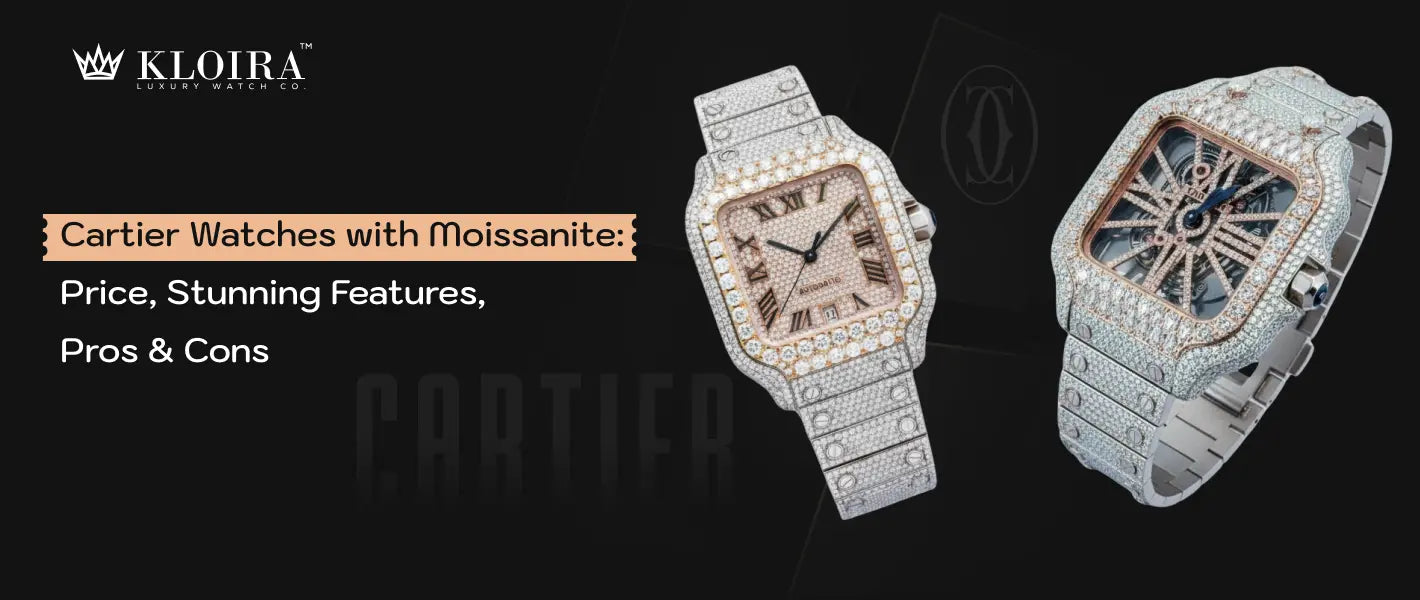
The Cartier Legacy: More Than Just a Pretty Face
Here's the deal – Cartier's not your run-of-the-mill watch company. This is the stuff royalty wears. Literal kings and queens. Movie stars too. Louis-François Cartier started this whole thing in Paris, and they've been crushing it ever since.
You know that feeling when you spot that signature blue box? Your stomach does a little flip. That happens because Cartier earned its stripes the hard way – by making watches so good, people pass them down through families. The Tank, the Santos – these aren't just watches. They're like wearing a piece of art that also happens to tell you when your meeting starts.
Moissanite: The Gemstone That's Turning Heads
Alright, stick with me here because this gets wild. Moissanite – heard of it? Most people haven't, but this stuff's kind of incredible.
Back in 1893, this French guy Henri Moissan found it in a meteor crater out in Arizona. Yeah, you heard that right – it literally came from space. These days, scientists make it in labs, which actually works out better for everyone.
Get this: moissanite's refractive index hits 2.65-2.69. Diamonds? They're at 2.42. What's that mean in regular English? Moissanite actually sparkles harder than a diamond. Seriously. It's also tough stuff – 9.25 on the Mohs hardness scale, with diamonds sitting at 10. So it can handle whatever you throw at it.
The crazy part? It costs way less than diamonds. We're talking up to 90% cheaper for the same size and quality, according to what people in the business say. That's not beer money – that's serious savings.
Why Combine Cartier Watches with Moissanite?
So what's the point of mixing Cartier's reputation with moissanite? Hear me out because this actually makes total sense.
Look, fancy stuff doesn't need to empty your bank account anymore. With moissanite, you get the same jaw-dropping shine without needing a second mortgage. Best of both worlds, basically.
There's something cool about this match-up too. It feels fresh. Like you're getting the luxury part without the guilt that sometimes comes with it. You're buying a watch that says you've got taste and brains. You're not just following the crowd.
Luxury Customization: Making It Yours
This is where Kloira shows up, and honestly, this part gets exciting. Real customization isn't about gluing random stones onto metal – it's about building something that screams you.
Picture your go-to Cartier, but now it's got carefully picked moissanite stones that catch every bit of light when you move your wrist. Maybe you want something classy with just a little bling on the edge, or maybe you want the whole thing covered in sparkle. Either way works. And here's the kicker – you're getting the custom treatment without paying what luxury houses usually charge.
Want to take an old Cartier Panthère and give it new life with moissanite details? Easy. Been daydreaming about a Santos with a moissanite-covered edge that stops people mid-conversation? Totally doable. At Kloira, we figure your watch should match who you are, not just what's in your wallet.
The Real Talk: Pros and Cons
Let's cut through the BS for a minute. Nothing's flawless, and moissanite on expensive watches has its ups and downs. But honestly? The good stuff outweighs the bad.
The Good Stuff:
That shine is next level. Really, moissanite throws light around in a way that makes people stare. It's also built like a tank – you're not babying some fragile rock that cracks if you bump a doorframe. Plus, making it in a lab means you're not tearing up the earth. No mining operations, no sketchy ethics, none of that weighing on your mind.
And the money part? You're keeping thousands in your pocket – sometimes even more – compared to buying diamonds. That's a trip somewhere nice, a chunk off your car loan, or honestly, room in the budget for another watch.
The Not-So-Good:
Some snobby types will judge. Can't sugarcoat it – there's a group out there that thinks diamonds or nothing. Moissanite also plays with light a bit differently. Sometimes in certain lighting, you'll see little rainbow flashes that diamonds don't do. Some people dig that extra personality, some don't.
Here's the truth: resale value isn't quite where diamonds are at. Cartier watches keep their worth really well, but if you customize one with moissanite, it might not sell for as much as a diamond version down the road. But if you're buying it because you love it, not to flip it later, does that really matter?
Keeping That Sparkle: Care Tips
Looking after your moissanite Cartier's not rocket science, but you need to put in a little effort.
Clean it a lot – like, make it part of your routine. Grab a soft brush, some basic soap, warm water, and you're set. Do this every week and it'll look brand new constantly. Stay away from nasty chemicals like bleach or pool water. They won't wreck the moissanite, but they might mess with other parts of the watch.
Put it somewhere safe when it's off your wrist. A soft cloth or its own spot in your watch case keeps it scratch-free. And seriously, get it checked out by a pro once a year or so. Kloira does maintenance that keeps everything working right and looking sharp.
Where to Find These Beauties
So you're into this idea – now where do you actually get one?
Here's the thing: Cartier doesn't sell moissanite versions directly. Not yet anyway – who knows what happens later? But that's exactly why places like Kloira exist. We start with real Cartier watches and add moissanite stones the right way, keeping all the quality and skill that makes Cartier special.
Find customizers who know their way around luxury watches, use good moissanite, and back up their work with warranties. Don't just give your precious Cartier to anyone with tools and ambition. Read reviews, look at their past jobs, make sure they're upfront about how they work.
Is This the Future?
I think we're watching something big happen. According to Allied Market Research, the lab-grown gemstone business is expected to hit $55.6 billion by 2031, and moissanite's right at the front.
Younger people are changing what luxury even means. They want the real deal, stuff that doesn't trash the planet, and actual value – not just a famous name. They're asking hard questions about where their cash goes and what happens because of what they buy. Moissanite checks all those boxes.
Sure, diamonds aren't disappearing – they've got hundreds of years of ads and tradition propping them up. But moissanite? It's making its own lane in the luxury scene, and looking good doing it. Will every fancy brand jump on this train? Probably not right away, but you can see where things are headed.
Cartier's Sustainability Story
Cartier's already doing stuff around sustainability – they're in the Responsible Jewellery Council and talk about getting materials the right way. They haven't officially gone for moissanite yet, but the dots aren't hard to connect.
Lab-made moissanite fits perfectly with the whole responsible luxury thing. No mining means no destroyed landscapes, no kicked-out communities, no moral questions keeping you up at night. For a brand like Cartier that keeps talking more about responsibility, moissanite seems like a logical next step.
Think about a future where Cartier sells moissanite versions right next to the diamond ones, letting people pick options that match what they believe in. That's not pie-in-the-sky stuff – that's smart business.
Moissanite vs. The Competition
Let's see how moissanite measures up against other diamond stand-ins for fancy watches.
Sapphires look great and they're super hard (9 on the Mohs scale), but they don't sparkle like diamonds do. They're perfect when you want color, but they don't quite deliver that clear, bright fire that moissanite brings.
Rubies give you that deep red class and hold up just as well, but again, you're getting color instead of that transparent, light-catching brilliance moissanite's known for.
Cubic zirconia (CZ) costs nothing, but it's also soft and gets cloudy over time. It's basically the cheap knockoff version – fine for throwaway jewelry, terrible for something you want to keep.
Moissanite? It's got the sparkle, the strength, and the price that puts it in the perfect spot for customizing luxury watches. It doesn't pretend to be something else. It's confident being exactly what it is.


Comments
Post a Comment